
Tooth Sensitivity in Dubai Climate: Causes and Simple Fixes
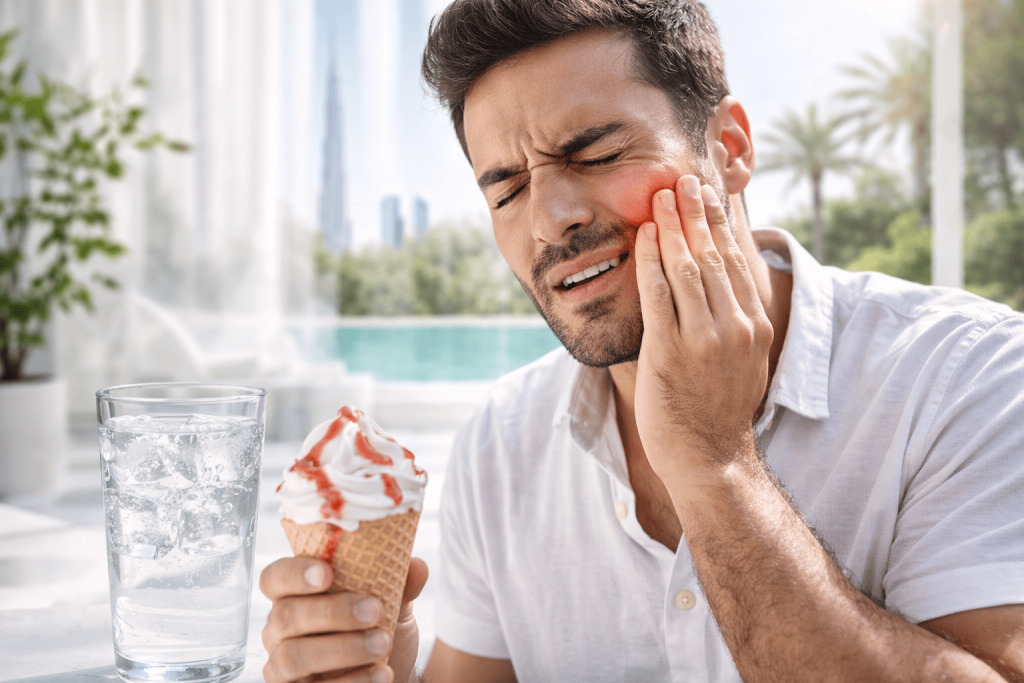
Many people in Dubai experience sudden sharp pain when drinking cold water or eating ice cream. This is tooth sensitivity. It is a common problem, but it is often ignored. People think it is normal, or that it will go away on its own. The truth is tooth sensitivity is a sign that your teeth need care. It can interfere with your daily life. Drinking cold coffee, enjoying desserts, or even brushing can become uncomfortable. Dubai’s hot and dry climate makes tooth sensitivity more noticeable. Dehydration, increased coffee consumption, and frequent AC use can all worsen the problem. Tooth sensitivity affects adults of all ages. Busy professionals, families, and seniors experience it alike. Some have mild discomfort. Others feel sharp pain that lasts for seconds or minutes. If left untreated, sensitivity can progress to cavities, gum problems, or enamel loss. The good news is this: tooth sensitivity can be managed. Simple lifestyle changes, home care, and dental treatment often reduce pain. In this guide, we explain the main causes of tooth sensitivity in Dubai. We highlight how climate, diet, and habits play a role. We also provide easy fixes and preventive tips. By the end, you will understand why your teeth feel sensitive and what you can do to protect your smile in Dubai’s environment.
What Is Tooth Sensitivity?
Tooth sensitivity, or dentin hypersensitivity, happens when the inner part of the tooth, called dentin, is exposed. Dentin contains tiny tubes connected to nerves inside the tooth. When these tubes are exposed, hot, cold, sweet, or acidic foods trigger pain. Healthy teeth have enamel and gums protecting dentin. When enamel wears down or gums recede, sensitivity occurs. It is different from a toothache caused by decay or infection. Sensitivity can be mild or severe. The main thing is that it signals a problem. In Dubai, climate and lifestyle can make this problem more noticeable.
Why Dubai’s Climate Affects Tooth Sensitivity
Dubai’s hot, dry weather can affect oral health. Dehydration reduces saliva. Saliva is important because it protects teeth from acids and bacteria. When saliva is low, enamel wears faster, and sensitivity increases. Air-conditioned offices can also dry out mouths. People drink cold water or soft drinks to stay cool. Sudden temperature changes can trigger sharp pain in sensitive teeth. High consumption of sugary drinks, coffee, and tea is common in Dubai. These beverages can erode enamel over time. Even small changes in diet or hydration can worsen sensitivity in this environment. Being aware of how the climate impacts teeth helps patients take preventive steps.
Common Causes of Tooth Sensitivity
Tooth sensitivity happens for many reasons. Some are related to lifestyle. Others are due to dental issues.
- Enamel Erosion: Acidic foods, drinks, or frequent brushing with hard bristles wear down enamel.
- Gum Recession: Gums pull away from teeth over time, exposing dentin. This is more common in adults.
- Teeth Grinding (Bruxism): Grinding or clenching teeth wears down enamel and triggers sensitivity.
- Cavities or Decay: Small cavities can make teeth react to temperature or sugar.
- Recent Dental Procedures: Whitening, crowns, or fillings may temporarily increase sensitivity.
- Poor Oral Hygiene: Plaque buildup can irritate gums and enamel.
- Dry Mouth: In Dubai’s climate, dehydration and AC use can reduce saliva, increasing risk.
Recognizing the cause is the first step to reducing discomfort.
Signs You May Have Tooth Sensitivity
Tooth sensitivity can be mild or sharp. Common signs include:
- Pain when drinking hot or cold drinks
- Discomfort with sweet or acidic foods
- Sudden sharp pain while brushing or flossing
- Exposed roots due to receding gums
- Discomfort when biting or chewing
If these signs appear, it is important to visit a dentist. Early care prevents more serious dental issues. Ignoring sensitivity can lead to cavities or gum problems.
Simple Fixes for Tooth Sensitivity
The good news is tooth sensitivity is often manageable. Some solutions can be applied at home. Others require dental care.
- Use a Soft-Bristled Toothbrush: Hard bristles can wear enamel and irritate gums. Brush gently twice a day.
- Desensitizing Toothpaste: Special toothpaste helps block pain signals from nerves. Use it consistently.
- Proper Brushing Technique: Avoid aggressive brushing. Angle the brush at 45 degrees toward the gum line and use light pressure.
- Limit Acidic Foods and Drinks: Reduce soda, citrus, coffee, and energy drinks. Rinse your mouth with water after consuming acidic foods.
- Stay Hydrated: Drink water regularly to prevent dry mouth. Saliva protects enamel and gums.
- Manage Teeth Grinding: Use a night guard if you grind teeth. This protects enamel and reduces sensitivity.
- Regular Dental Checkups: Professional cleaning and early treatment reduce sensitivity. Visit your dentist at least every six months.
Professional Treatments for Tooth Sensitivity
Some cases need dental care. Dentists can provide solutions depending on severity.
- Fluoride Treatments: Strengthen enamel and reduce sensitivity.
- Bonding or Sealants: Cover exposed dentin and protect teeth.
- Gum Grafting: For receding gums exposing roots.
- Restorative Work: Fill cavities or replace worn fillings.
Early treatment is always easier and more comfortable. If you experience persistent sensitivity, schedule a visit. You can learn more about professional dental care here: https://mmdc.ae/general-dentistry-dubai.
Lifestyle Tips for Dubai Residents
Dental care is not just about brushing. Lifestyle matters.
- Avoid skipping meals. Irregular eating can increase acid attacks on teeth.
- Limit coffee and sugary drinks. Drink water afterward.
- Chew sugar-free gum to stimulate saliva.
- Avoid using teeth as tools to open bottles or bite hard objects.
- Take breaks from AC to reduce dry mouth risk.
Small habits make a big difference in protecting enamel and gums.
When Tooth Sensitivity Signals a Bigger Problem
Sometimes sensitivity is a warning. It can signal:
- Cavities that need filling
- Cracked or chipped teeth
- Infection or abscess
- Advanced gum disease
Ignoring persistent sensitivity can lead to pain and costly treatments. Early diagnosis saves time, money, and discomfort. Dentists check for hidden issues that patients may not notice.
Stress, Bruxism, and Sensitivity in Dubai Adults
Many adults grind their teeth without realizing it. Stress from work, traffic, or family can worsen bruxism. Grinding wears down enamel, causing sensitivity. Night guards or stress management techniques help. Awareness of habits reduces long-term damage. Lifestyle adjustments paired with dental care protect teeth effectively.
Preventing Tooth Sensitivity in the Long Term
Prevention is better than cure. Adults in Dubai can take steps to prevent sensitivity:
- Brush gently twice a day with fluoride toothpaste
- Floss daily
- Stay hydrated
- Limit acidic foods and drinks
- Visit the dentist regularly
- Wear mouthguards if grinding teeth
By combining home care and professional checkups, sensitivity can be minimized or avoided.
Tooth Sensitivity Myths
Some common myths make the problem worse:
- Myth: Sensitivity is normal with age.
Fact: Age alone does not cause sensitivity. It is usually enamel wear, gum recession, or decay. - Myth: Avoid brushing sensitive teeth.
Fact: Skipping brushing worsens sensitivity and oral health. - Myth: Whitening always increases sensitivity permanently.
Fact: Temporary sensitivity may occur, but it usually resolves after treatment.
Knowing the truth helps patients manage sensitivity effectively.
When to See a Dentist in Dubai
Schedule a dental visit if:
- Sensitivity lasts more than a few weeks
- Pain is severe or sharp
- Teeth appear chipped or worn
- Gums are bleeding or receding
Early intervention prevents serious damage. Dentists provide customized solutions for each patient.
Conclusion
Tooth sensitivity is common in Dubai adults. Climate, lifestyle, diet, and habits make it more noticeable. It is often a sign of enamel erosion, gum recession, or dental problems. Ignoring sensitivity can lead to pain, cavities, and gum disease. Simple fixes at home and professional care reduce discomfort and protect teeth. Brushing properly, using desensitizing toothpaste, staying hydrated, and regular dental visits make a big difference. Awareness and early action are key. Protecting your teeth today ensures a healthy smile for years. Don’t wait for pain to get worse. If sensitivity persists, consult a dentist promptly. Your teeth deserve care and attention every day.
You can learn more about professional care and solutions here: https://mmdc.ae